
Healing neuroplastic pain/symptoms requires you to build a relationship with your nervous system and guide it toward safety and regulation.
A healthy nervous system is a flexible system, shifting easily between different states. In contrast, chronic nervous system dysregulation means being stuck in states fight, flight, fawn, or freeze/shutdown for prolonged amounts of time.1,2 During prolonged dysregulation, the nervous system becomes sensitized.
When sensitized, your brain is more easily alarmed – and it may generate neuroplastic pain/symptoms in the absence of physical damage or disease. This is why nervous system regulation is key in healing chronic pain/symptoms.
Shifting Within the Nervous System
Your nervous system moves between three different states:
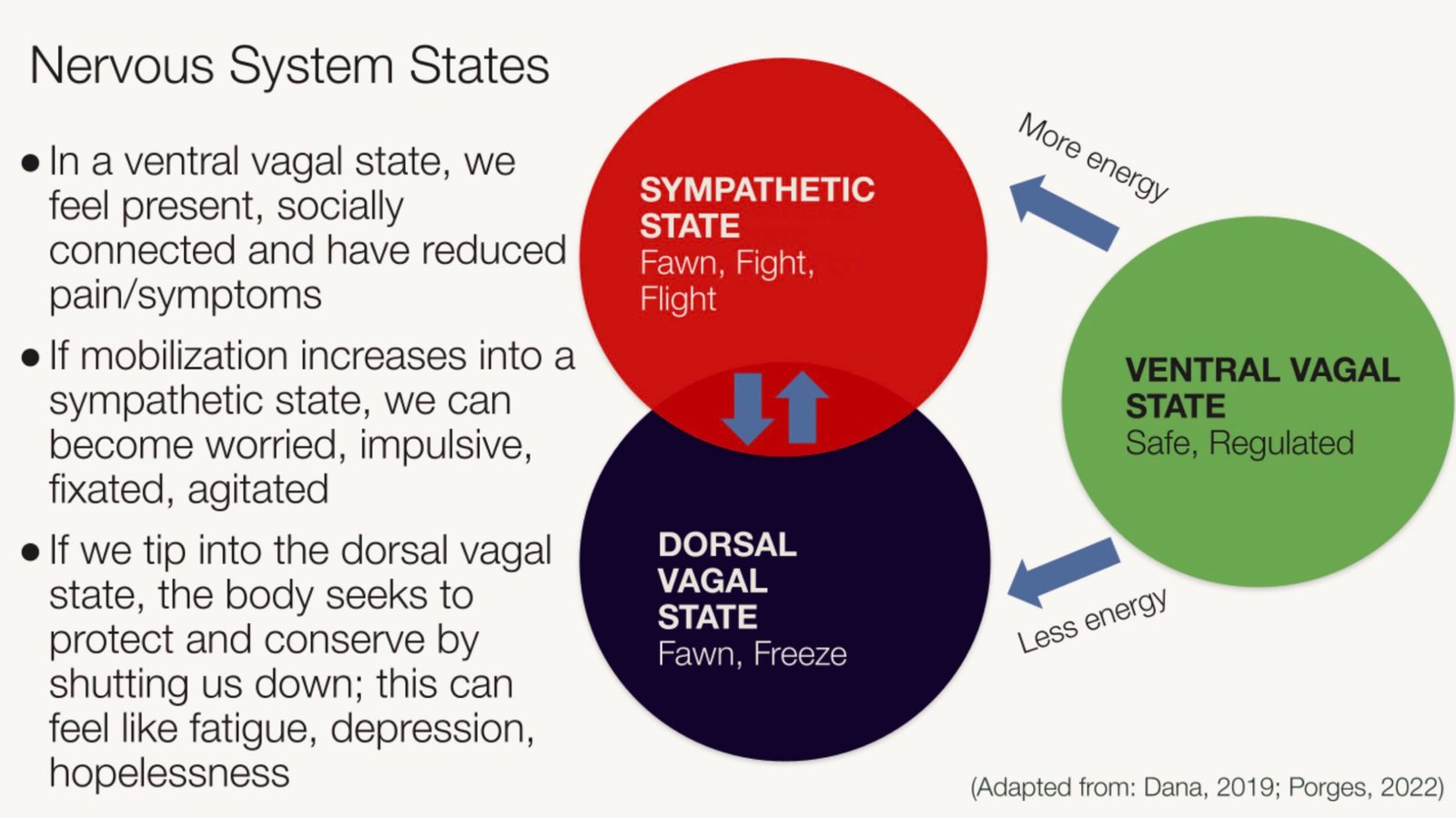
Your nervous system decides whether to shift to ventral vagal, sympathetic, or dorsal vagal states, based on neuroception. When your nervous system receives signals from your body, environment, and relationships, it makes split decisions on whether you are safe or in danger. Neuroception is like your smoke alarm – and sometimes it can be overprotective.
- Signals of safety detected → ventral vagal activation1,5
- The result: You feel connected, safe, social, calm
- Signals of danger detected → sympathetic system activation1,5
- The result: You feel mobilized to take action, fight, flight, fawn
- Signals of high and/or persistent danger → dorsal vagal activation1,5
- The result: You shift into freeze, shut down, fawning or collapsing to survive
Below we break down the different states of our nervous system and how they influence pain and symptoms.
Safe & Regulated (Ventral Vagal)
Present, calm, heart rate regulated, peaceful, joyful, playful, creative, productive, quality sleep, improved health, increase in sense of wellbeing, reduction or dissipation of neuroplastic pain & symptoms.
Fight or Flight (Sympathetic)
Mobilized, more energy, fight or flight, breath is shallow and short, heart rate increase, looking for signals of danger, vigilance, sensitivity, fear, anxious/panicked, angry, frustrated, fixating, world feels chaotic, protective/defensive, relationship distress, sleep disturbances, high cholesterol, blood pressure, tension, digestive issues, and neuroplastic pain/symptoms.
Fawn (Sympathetic or Dorsal Vagal)
People pleasing, perfectionism, worrying what others think, lack of boundaries, agreeableness, lack of assertiveness/expression or self care, and neuroplastic pain & symptoms.
Freeze/Shutdown (Dorsal Vagal)
Immobilization, dissociation, collapse, despair, depression, alone, lack of motivation, disconnection, hopeless, helpless, abandoned, foggy and inability to think or act, the world feels empty, fibromyalgia, chronic fatigue, digestive issues, and neuroplastic pain & symptoms.
Why the Desensitize App Utilizes a Somatic Approach
When it comes to the nervous system, your vagus nerve facilitates bi-directional communication between your body and brain.
About 80% of signals of safety/danger come are sensory, coming up from your body. Physical inputs inform your brain about what you’re experiencing. Only 20% of signals of safety/danger go directly from the brain to the body.1,5
This is why safety starts in the body; you need to regulate your nervous system to improve your mental health, heal trauma, and reduce neuroplastic pain/symptoms.
Embodiment Restores Regulation
Embodiment means living life guided not only by cognition, but with a safe connection to the body and an integrated awareness of physical sensations.
Embodiment is occurs when you connect with the sensations of your:
- Body
- Senses
- Movements
- Emotions
- Nervous system state
In the Desensitize App, we provide a comprehensive program to help you restore safe brain-body communication – by practicing embodiment with:
- Your Pain & Symptoms
- Your Nervous System States
- Your Emotions
Getting Started
The first step of embodiment is to Drop In and Describe. The Drop In and Describe skill helps you:3
- Increase your ability to accurately and reliably identify your nervous system state
- Interrupt dysregulated patterns of fight, flight, fawn, freeze/shutdown
- Respond to the needs and cues of your nervous system
- Bring perception to your neuroception
- Restore a sense of embodiment
Practice steps:
- Drop into your body and notice the sensations occurring in the present moment
- Describe your nervous system state with curiosity and interest
- This skill will only take 30 seconds to a minute
- Rather than judging or changing what you’re feeling, simply observe and name it
- Practice this consistently each day until it becomes quick, automatic and easy
- Over time this will increase awareness, connection, and harmony with your body
Looking for a comprehensive, guided program to develop embodiment, regulate your nervous system, and reduce your chronic pain/symptoms?